2019-06-06 13:33:09 来源: chinadaily.com.cn
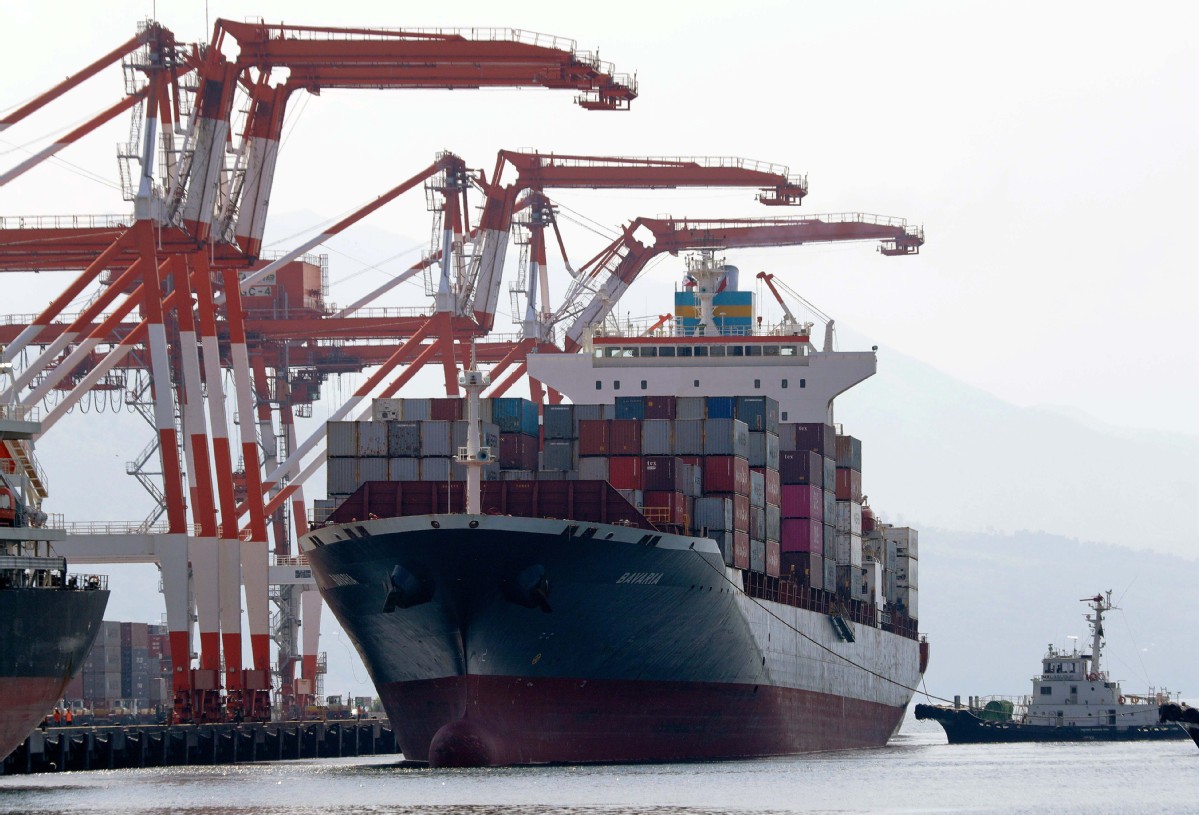
The Liberian-registered container vessel MV Bavaria, carrying mixed waste, leaves Subic Bay in the Philippines for Vancouver. ROUELLE UMALI/XINHUA
Developed nations urged to rethink disposal methods
Faced with mounting piles of imported foreign waste, Southeast Asian nations are making it known that they no longer wish to serve as the world's dumping grounds.
Countries across the region have been inundated with waste imports since last year when China stopped accepting a range of imported waste on environmental grounds.
Malaysia, Thailand and Vietnam have all restricted plastic waste imports, but the Malaysian government has said that shipments continue to arrive illegally.
With no restrictions in place in Indonesia, environmental campaigners fear that the country will soon become the world's largest importer of plastic waste.
Meanwhile, the Philippines is locked in a dispute with Canada over illicit garbage shipments, while further illegal imports of waste have arrived in the Asian nation from Australia.
"We urge developed countries to re-evaluate their waste disposal methods and stop shipping garbage to other countries," Malaysian Environment Minister Yeo Bee Yin said last week. "If they continue to ship garbage here, we will not hesitate to return it."
For decades, Asian nations have processed plastic waste originating in wealthier parts of the world. High-income nations are responsible for 87 percent of global plastic waste exports, according to research results from the University of Georgia in the United States, and 75 percent of all exported waste is sent to the East Asia and Pacific region.
The term "waste colonialism" was coined to describe this trend, where regulators in developed nations make it so expensive and difficult to process waste domestically that it ends up being shipped abroad.
The term was first recorded in February 1989 at the United Nations Environmental Programme Basel Convention working group, when African nations voiced concerns about the disposal of hazardous waste in poor countries by wealthy nations.
Before the ban introduced by China last year, the country received 45 percent of the world's plastic waste. Exporters are now straining the processing abilities of other Asian nations by sending them waste that previously would have gone to China.
According to activist groups in Malaysia, last year processing plants reached maximum capacity and many metric tons of waste were burned or buried.
Asian leaders say that receiving so much foreign waste is not only harmful to people and the environment, it is demeaning.
Late last month, presidential spokesman Salvador Panelo said the Philippines would no longer stand for being "treated as trash by foreign nations", while in Malaysia, Yeo, the environment minister, described the illegal influx of foreign waste as "unfair and uncivilized".
In the Philippines, the government is hiring a private company to ship back 1,500 tons of household waste that arrived illegally from Canada several years ago. It will also return seven containers of garbage that arrived illegally from Australia last month. The containers were labeled "processed fuel", according to local media.
Abigail Aguilar, a campaigner for Greenpeace Philippines, said: "Why do we need to repeatedly remind the world that we are not a garbage dump? Illegal waste dumping to developing countries should be stopped at all costs. We refuse to be treated as rich countries' trash dumps."
Last week, Malaysia announced plans to return 3,000 tons of waste sent illegally to the country from the US, Australia and Europe among other regions. The nation has already returned five such shipments to Spain.
The waste problem in Asia escalated last year when China stopped accepting imports of mixed paper and post-consumer plastic products on Jan 1 due to capacity constraints and environmental concerns.
China began phasing in restrictions five years ago, and told the World Trade Organization of its plans to halt plastic waste imports six months before the ban took effect.
Before this, the country had been the world's largest importer of wastepaper and plastic. After the ban was introduced, exporting nations began to send waste elsewhere in Asia.
Last year, Indonesia received 320,000 tons of plastic waste, up from 128,000 tons in 2017, according to the nation's trade ministry. The government has not announced any restrictions on imports, and the environmental foundation BaliFokus predicts that the country will soon become the world's largest importer of waste.
In India, imports of plastic waste doubled last year, and the government plans to end them later this year.
Malaysia became the largest new market for foreign plastic waste after the Chinese ban, prompting the government to halt imports in October.
From January to July last year, Malaysia received 456,000 tons of plastic waste from overseas, compared with 316,600 tons for all of 2017, according to the government.
Over the same period, the US alone sent 195,444 tons of plastic waste to Malaysia, more than double the amount for all of 2017.
The United Kingdom doubled its exports of plastic waste to Malaysia between January and April last year to 30,318 tons, according to UK export data.
It also increased such exports to Vietnam by 49 percent over the same period, and began sending plastic waste to Thailand for the first time in two years.
Heng Kiah Chun, a campaigner at Greenpeace Malaysia, said the country's plastic recycling industry became overwhelmed by the influx and could not accommodate the waste in a sustainable way.
Last year, Greenpeace reported numerous instances of dumping, open-air burning and other illegal practices contributing to pollution.
The environmental organization discovered 45 large dumping sites, with waste originating from 12 countries in Europe as well as Australia, New Zealand, Saudi Arabia, Argentina, the Philippines, the US and Canada.
Some people living in villages near sites where waste was burned became ill after prolonged exposure to toxic smoke, according to regional reports.
Despite there being an import ban in place, Malaysia's environment ministry reported last month that some foreign recycling exporters were intentionally mislabeling shipments and sending waste to the country illegally.
On May 28, at a news conference in Port Klang, a major Malaysian port, Yeo, the environment minister, stood in front of a shipping container full of plastic waste that had arrived illegally from Australia.
"When China banned plastic waste imports, most of this waste was sent to developing countries, and no one was tracking it to make sure it was disposed of properly," Yeo said.
Simon Ellin, chief executive of the UK Recycling Association, said that if done correctly, the trade in waste products can be beneficial for both exporters and importers.
"We shouldn't let a minority of companies that operate in violation of international and domestic laws undermine the legitimate trade of a secondary commodity," Ellin said. "Malaysia has itself acknowledged the benefits to its manufacturing sector of importing recyclable materials that can be turned into new products there."
But Ellin said the contents of some containers and the conduct of some exporters highlight the need for reform.
He said such waste materials are so "variable and difficult to separate" that recyclers face the stark choice of whether to stop collecting them altogether or to incinerate them.
"The longer-term solution, of course, is for the producers not to produce them in the first place," he said. "A trip around any supermarket fruit and vegetable aisle has me shaking my head in disbelief at the plethora of unnecessary plastics 'protecting' the produce."
Changes to the global waste trade are on the way. Last month, 187 countries agreed to add plastic waste to the Basel Convention, a treaty that regulates the movement of hazardous materials worldwide.
A resolution, which will take effect next year, will result in some forms of plastic waste requiring prior consent from receiving countries before it is traded. The US, which is the world's biggest exporter of plastic waste, is not party to the convention.
Beau Baconguis, Asia Pacific coordinator for campaign group Break Free From Plastic, said, "The Basel Convention mandates countries to deal with their plastic waste problem in their own backyards instead of passing the burden on to other countries.
"Until the change takes effect in 2020, developing countries are on their own in safeguarding their territory."
Tensions between the Philippines and Canada eased on Friday, when 69 containers from Canada, including nonrecyclable plastic, wastepaper, household waste, electronic waste and used adult diapers, were loaded on the Liberian-registered MV Bavaria, which left the port of Subic Bay for the 20-day voyage to Vancouver.
Philippine Foreign Affairs Secretary Teodoro Locsin Jr. later asked diplomats who had been recalled from Canada to return to their posts and apologized "for the trouble you went through", according to The Philippine Star.
Canada contacted French shipping company Bolloré Logistics to take the shipment.
Subic Bay Metropolitan Authority chairman Wilma Eisma called the removal of the waste "one proud moment for all Filipinos".
